

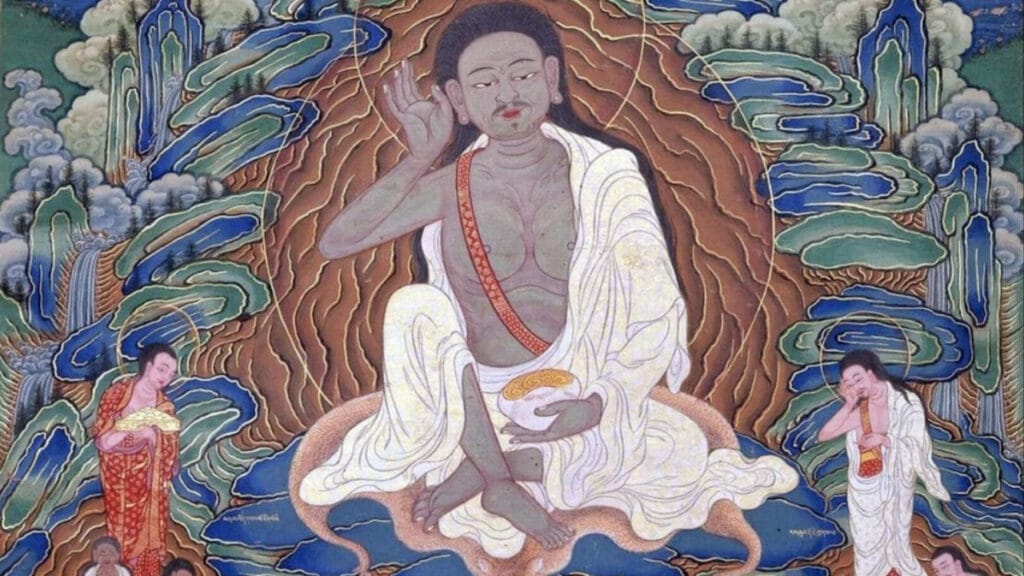
From the foregoing chapters it will be clear that the deepest sources of inspiration are not the big monasteries or the great monastic colleges and universities (like Sera, Drepung, and Gandent, the greatest seats of learning in Tibet), but the humble hermitages, tucked away in the folds and cracks of mighty mountains, or in lonely valleys and in inaccessible canyons, or perched on high cliffs like eagles’ nests, or scattered over the solitudes of remote highlands and along the shores of placid lakes, far away from the tracks of caravans and the noise of trading camps and market-towns . . .
. . . The greatest hermit of Tibet was the poet-saint and yogi Milarepa, who spent the larger part of his life in caves and in the most inaccessible mountain fastnesses — and up to the present day his followers (in the Kagyu Order) lay greater stress on silence and meditation than on book knowledge and learned discussion. His life is perhaps the best example for the profound influence that even the most unworldly hermit may exert upon the word at large. His contributions to the cultural and religious life . . . are unrivaled in their originality and spontaneity, their beauty and sense of dedication.
Lama Govinda
from The Way of the White Clouds; A Buddhist Pilgrim in Tibet